⚠️ Research Use Only — This product is intended for in vitro research purposes only. Not for human consumption or clinical use. Consult a licensed physician for medical advice.
BPC-157 in Bali: Body Protection Compound Research
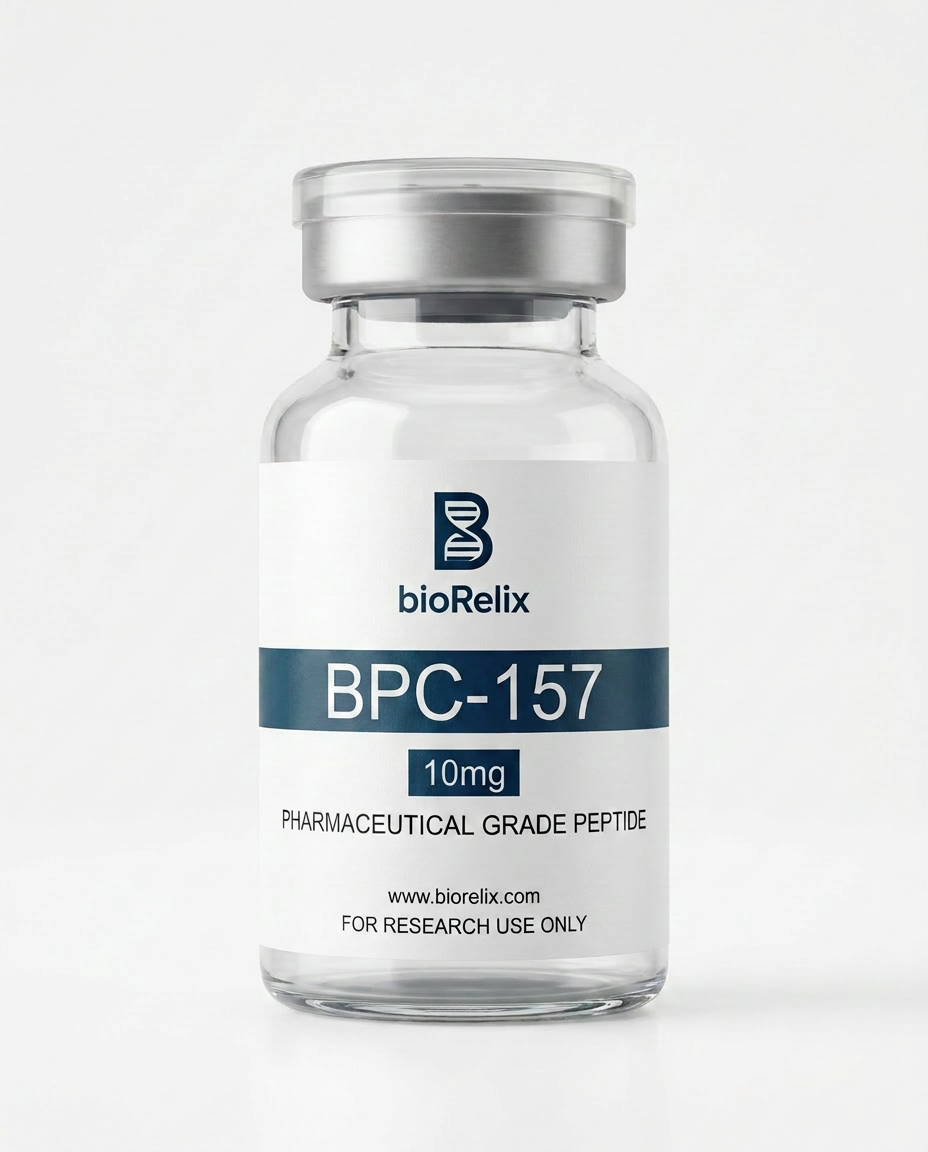
BPC-157 (Body Protection Compound-157) is a synthetic peptide derived from a protective protein found in human gastric juice. It has been extensively studied for tissue repair, wound healing, and anti-inflammatory properties across multiple organ systems in preclinical models.
Research-Grade BPC-157 Available in Bali
Third-party HPLC tested (≥98% purity) • Same-day cold-chain delivery • Payment via USDT or COD
Buy BPC-157 in Bali →What is BPC-157?
BPC-157 is a pentadecapeptide (15 amino acids) with the sequence:
Gly-Glu-Pro-Pro-Pro-Gly-Lys-Pro-Ala-Asp-Asp-Ala-Gly-Leu-Val
It is a partial sequence of the body protection compound (BPC) protein naturally found in human gastric juice. Unlike the full-length protein, BPC-157 is:
- Synthetically produced for research stability
- Resistant to gastric acid degradation (remains active in harsh pH environments)
- Orally and systemically bioavailable in animal models
- Not approved for human use by any regulatory authority
Mechanism of Action
BPC-157's exact mechanism is not fully elucidated, but preclinical research suggests it modulates several pathways:
Angiogenesis (Blood Vessel Formation)
- Upregulates VEGF (vascular endothelial growth factor) expression
- Enhances endothelial cell migration and capillary formation
- Improves blood flow to injured tissues
Growth Factor Signaling
- Interacts with growth hormone receptor pathways (animal studies)
- May modulate EGF (epidermal growth factor) and FGF (fibroblast growth factor)
Nitric Oxide (NO) Pathway
- Modulates NO production (context-dependent: pro-healing or anti-inflammatory)
- Influences vasodilation and tissue oxygenation
Anti-Inflammatory Effects
- Reduces pro-inflammatory cytokines (IL-6, TNF-α) in rodent models
- Stabilizes cellular membranes
- Protects against oxidative stress
Preclinical Research: Tissue Repair Applications
BPC-157 has been studied in over 100 published animal studies (primarily rodents) across multiple injury models:
Musculoskeletal Injuries
- Tendon healing (Achilles tendon transection models) — Accelerated collagen deposition and tensile strength recovery
- Ligament injuries (MCL/ACL damage) — Improved structural integrity
- Muscle tears — Enhanced muscle fiber regeneration, reduced fibrosis
- Bone fractures — Increased callus formation and bone density in rat models
Gastrointestinal Protection
- Ulcer healing (NSAID-induced, ethanol-induced, stress-induced) — Reduced lesion size, faster epithelial repair
- Inflammatory bowel disease models (colitis) — Decreased mucosal damage
- Esophageal lesions — Protection against acid reflux damage
Vascular and Cardiovascular
- Ischemia-reperfusion injury — Reduced organ damage (heart, liver, kidney)
- Blood vessel repair — Enhanced angiogenesis in wound models
- Hemorrhagic shock — Improved survival rates in rodent studies
Neurological
- Traumatic brain injury (TBI) — Neuroprotective effects, reduced edema
- Peripheral nerve damage — Accelerated nerve regeneration (crush injury models)
- Neurotoxicity — Protection against excitotoxic and inflammatory insults
Key Research Findings
Study: Tendon-to-Bone Healing (Krivic et al., 2006)
BPC-157 administered to rats with surgically transected Achilles tendons showed:
- Faster functional recovery — Weight-bearing restored 30% earlier than controls
- Increased collagen synthesis — Higher Type I/Type III collagen ratio (indicator of mature healing)
- Enhanced mechanical strength — Tendons withstood greater load before failure
Study: Gastric Ulcer Model (Sikiric et al., 1993)
Rats with cysteamine-induced duodenal ulcers treated with BPC-157 (intramuscular injection):
- Ulcer area reduced by 60-80% compared to saline controls
- No rebound effect — Healing sustained after treatment cessation
- Effective at ng/kg doses — Extremely low dosing threshold observed
Study: Ligament Healing (Krivic et al., 2008)
In rats with medial collateral ligament (MCL) tears:
- Accelerated healing — 40% faster recovery of ligament tensile strength
- Reduced scar tissue — More organized collagen architecture (histological analysis)
Dosing in Animal Studies
Published research typically uses:
- Low dose: 10 ng/kg to 10 µg/kg (effective in many models)
- High dose: 10-100 µg/kg
- Route: Subcutaneous, intramuscular, intraperitoneal, or oral (all showed efficacy)
- Frequency: Once daily or twice daily
- Duration: 7-28 days depending on injury model
Note: These are animal study parameters. No human clinical trials have established safe or effective dosing.
BPC-157 vs. TB-500: What's the Difference?
| Property | BPC-157 | TB-500 (Thymosin Beta-4) |
|---|---|---|
| Amino acid length | 15 (pentadecapeptide) | 43 (polypeptide) |
| Origin | Synthetic (derived from gastric BPC protein) | Naturally occurring in all tissues |
| Primary mechanism | Angiogenesis, anti-inflammatory, gastric protection | Actin regulation, cell migration, wound healing |
| Research focus | Tendon/ligament, GI ulcers, systemic protection | Muscle injury, inflammation, connective tissue |
| Oral bioavailability | Yes (in animal models) | Unlikely (larger peptide) |
Many researchers use BPC-157 and TB-500 together in preclinical models, as they may have complementary effects on tissue repair.
Availability in Indonesia
BPC-157 is not approved by BPOM (Indonesia's drug regulatory authority) or the FDA for medical use. It is available for purchase as a research-grade compound for non-human, in vitro research purposes.
BioRelix supplies research-grade BPC-157 synthesized by third-party laboratories with HPLC purity verification (≥98%). Our product is:
- Not a pharmaceutical-grade drug
- Not approved for clinical use in humans
- Intended solely for in vitro research
Storage and Reconstitution
BPC-157 is supplied as lyophilized powder and requires reconstitution with bacteriostatic water:
- Unreconstituted: Store at 2-8°C (refrigerator) or -20°C (freezer for long-term storage)
- Reconstituted: Store at 2-8°C, use within 14-28 days
- Avoid: Freezing after reconstitution, exposure to light, temperature fluctuations
For detailed reconstitution instructions, see our Peptide Reconstitution Guide.
Research Context: Why Study BPC-157?
BPC-157 is of interest because:
- Broad-spectrum tissue protection — Effects observed across multiple organ systems
- Low effective doses — Nanogram/kilogram dosing in animal studies
- Minimal toxicity — No LD50 (lethal dose) established in rodent studies (even at extreme doses)
- Stable peptide — Resists degradation in gastric acid and blood
However: No human clinical trials have been published. All data comes from preclinical animal research, primarily from a single research group in Croatia (University of Zagreb).
Order Research-Grade BPC-157 in Bali
5 mg vial — IDR 500,000
- ✓ Third-party HPLC tested (≥98% purity)
- ✓ Same-day delivery (orders before 2 PM WITA)
- ✓ Cold-chain storage from lab to door
- ✓ Payment via USDT (TON/TRC-20) or cash on delivery
References
- Sikiric P, Separovic J, Anic T, et al. The effect of BPC 157, H2-blockers, and cytoprotective agents on gastric ulcers. J Physiol Paris. 1993;87(4):221-230.
- Krivic A, Anic T, Seiwerth S, Huljev D, Sikiric P. Achilles detachment in rat and stable gastric pentadecapeptide BPC 157: Promoted tendon-to-bone healing and opposed corticosteroid aggravation. J Orthop Res. 2006;24(5):982-989.
- Seiwerth S, Rucman R, Turkovic B, et al. BPC 157 and standard angiogenic growth factors. Gastrointestinal tract healing, lessons learned from tendon, ligament, muscle and bone healing. Curr Pharm Des. 2018;24(18):1972-1989.
- Krivic A, Majerovic M, Jelic I, Seiwerth S, Sikiric P. Modulation of early functional recovery of Achilles tendon to bone unit after transection by BPC 157 and methylprednisolone. Inflamm Res. 2008;57(5):205-210.
- Sikiric P, Hahm KB, Blagaic AB, et al. Stable gastric pentadecapeptide BPC 157, Robert's stomach cytoprotection/adaptive cytoprotection/organoprotection, and Selye's stress coping response: Progress, achievements, and the future. Gut Liver. 2020;14(2):153-167.
⚠️ Reminder: This product is for research use only. Not for human consumption or clinical use. All efficacy data comes from animal studies. Always consult a licensed physician for medical advice regarding injuries or health conditions.