⚠️ Research Use Only — This product is intended for in vitro research purposes only. Not for human consumption or clinical use. Consult a licensed physician for medical advice.
Semaglutide in Bali: GLP-1 Receptor Agonist Research
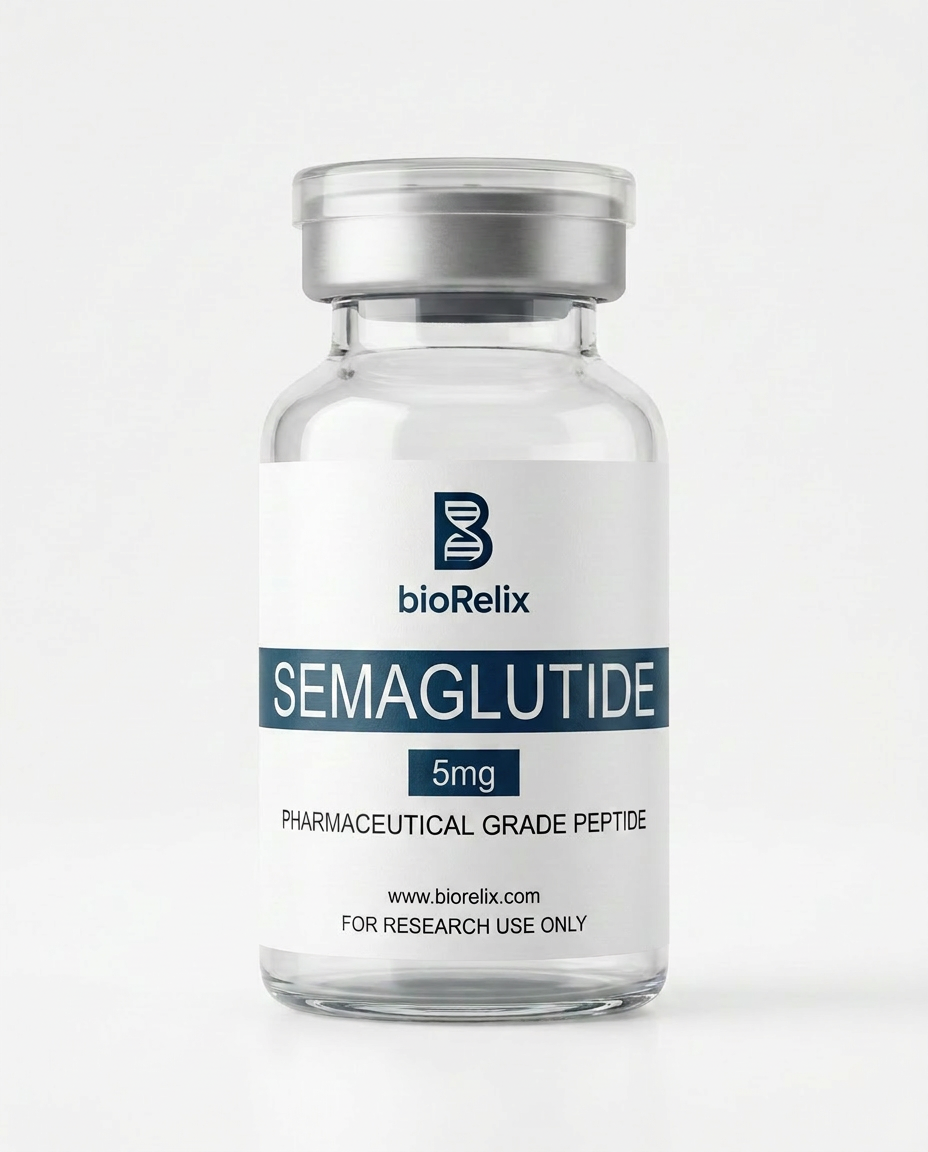
Semaglutide is a glucagon-like peptide-1 (GLP-1) receptor agonist that has become one of the most-studied peptides in metabolic research. Marketed as Ozempic (diabetes) and Wegovy (obesity) by Novo Nordisk, research-grade semaglutide is widely used to investigate appetite regulation, insulin sensitivity, and cardiovascular outcomes.
Research-Grade Semaglutide Available in Bali
Third-party HPLC tested (≥98% purity) • Same-day cold-chain delivery • Payment via USDT or COD
Buy Semaglutide in Bali →What is Semaglutide?
Semaglutide is a synthetic analog of human glucagon-like peptide-1 (GLP-1), a hormone produced by intestinal L-cells in response to food intake. Native GLP-1 has a half-life of only 2-3 minutes due to rapid degradation by the enzyme dipeptidyl peptidase-4 (DPP-4). Semaglutide is engineered with:
- Amino acid substitutions → Confer resistance to DPP-4 degradation
- Fatty acid side chain → Enables albumin binding, extending half-life to ~7 days
- Once-weekly dosing → Sustained receptor activation vs. daily injections
This molecular engineering makes semaglutide suitable for subcutaneous administration with prolonged pharmacokinetics.
Mechanism of Action
Semaglutide activates GLP-1 receptors in multiple tissues:
Pancreas
- Enhances glucose-dependent insulin secretion → Beta-cell stimulation only when blood glucose is elevated
- Suppresses glucagon release → Reduces hepatic glucose output
Brain (Hypothalamus & Brainstem)
- Appetite suppression → Reduces food intake via satiety pathways (POMC/CART neurons)
- Food reward attenuation → Decreases hedonic eating and cravings
Stomach
- Delays gastric emptying → Prolongs satiation, reduces postprandial glucose spikes
Cardiovascular System
- Cardioprotective effects → Mechanisms not fully understood; observed in SUSTAIN-6 and SELECT trials
Clinical Trial Data: Weight Loss
The STEP (Semaglutide Treatment Effect in People with obesity) trial program evaluated semaglutide 2.4 mg (Wegovy dose) for weight management:
STEP 1 (2021) — 68 Weeks
| Group | Mean Weight Loss | ≥10% Responders | ≥15% Responders |
|---|---|---|---|
| Placebo | -2.4% | 8% | 2% |
| Semaglutide 2.4 mg | -14.9% | 69% | 50% |
This was the first medication to achieve >10% mean weight loss in a large-scale trial, rivaling bariatric surgery outcomes.
STEP 2 (Type 2 Diabetes) — 68 Weeks
In participants with T2D, semaglutide achieved:
- 1.0 mg dose: -7.0% weight loss
- 2.4 mg dose: -9.6% weight loss
- HbA1c reduction: -1.6% (vs. -0.4% placebo)
Clinical Trial Data: Cardiovascular Outcomes
SELECT Trial (2023)
Published in the New England Journal of Medicine, the SELECT trial enrolled 17,604 adults with cardiovascular disease (no diabetes) to assess semaglutide 2.4 mg's cardioprotective effects:
| Outcome | Semaglutide | Placebo | Hazard Ratio |
|---|---|---|---|
| Major adverse CV events (MACE) | 6.5% | 8.0% | 0.80 (20% reduction) |
| Cardiovascular death | 2.5% | 3.0% | 0.85 |
| Non-fatal MI | 2.7% | 3.9% | 0.72 |
| Non-fatal stroke | 1.6% | 1.7% | 0.93 |
This trial established that semaglutide reduces cardiovascular risk independent of diabetes status, likely through mechanisms beyond weight loss alone.
Dosing Protocols (Research Context)
Clinical trials used gradual dose escalation:
Weight Loss Protocol (STEP Trials)
- Month 1: 0.25 mg subcutaneous once weekly
- Month 2: 0.5 mg once weekly
- Month 3: 1.0 mg once weekly
- Month 4: 1.7 mg once weekly
- Month 5+: 2.4 mg once weekly (maintenance)
Diabetes Protocol (SUSTAIN Trials)
- Month 1: 0.25 mg once weekly
- Month 2+: 0.5 mg or 1.0 mg once weekly (depending on glycemic target)
Gradual titration minimizes gastrointestinal side effects (nausea, vomiting, diarrhea).
Side Effect Profile
Most common adverse effects in STEP trials:
- Nausea (44% at 2.4 mg dose, typically transient)
- Diarrhea (30%)
- Vomiting (24%)
- Constipation (24%)
GI effects were most common during dose escalation and often resolved with continued use. Serious adverse events were rare (<5% across trials).
Rare but Notable Risks
- Pancreatitis (case reports; causality uncertain)
- Gallbladder disease (cholelithiasis risk increased with rapid weight loss)
- Diabetic retinopathy worsening (in T2D patients with rapid glucose reduction)
Comparison: Semaglutide vs. Tirzepatide vs. Retatrutide
| Peptide | Mechanism | Weight Loss | Trial Duration |
|---|---|---|---|
| Semaglutide | GLP-1 agonist | ~15% | 68 weeks |
| Tirzepatide | GLP-1/GIP dual agonist | ~22% | 72 weeks |
| Retatrutide | GLP-1/GIP/glucagon triple agonist | ~24% | 48 weeks |
Semaglutide was the first GLP-1 agonist to achieve >10% mean weight loss. Newer multi-agonists (tirzepatide, retatrutide) show incremental improvements but with more complex pharmacology.
Ozempic vs. Wegovy: What's the Difference?
Both are semaglutide, but marketed at different doses:
| Brand | Indication | Max Dose | Approval Year |
|---|---|---|---|
| Ozempic | Type 2 diabetes | 1.0 mg weekly (2.0 mg in some regions) | 2017 (FDA) |
| Wegovy | Obesity/weight management | 2.4 mg weekly | 2021 (FDA) |
The peptide sequence is identical; only the approved indication and maximum dose differ.
Availability in Indonesia
Ozempic and Wegovy are not widely available in Indonesia's public health system, and private pharmacies often face supply shortages due to global demand. Research-grade semaglutide—not manufactured by Novo Nordisk—is legal to purchase in Indonesia for non-human, in vitro research purposes.
BioRelix supplies research-grade semaglutide synthesized by third-party laboratories with HPLC purity verification (≥98%). Our product is:
- Not manufactured by Novo Nordisk
- Not a pharmaceutical-grade drug
- Not approved for clinical use in humans
- Intended solely for in vitro research
Storage and Reconstitution
Semaglutide is supplied as lyophilized powder and requires reconstitution with bacteriostatic water:
- Unreconstituted: Store at 2-8°C (refrigerator) or -20°C (freezer for long-term storage)
- Reconstituted: Store at 2-8°C, use within 28 days
- Avoid: Freezing after reconstitution, exposure to light, temperature fluctuations
For detailed reconstitution instructions, see our Peptide Reconstitution Guide.
Research Context: Why Study Semaglutide?
Semaglutide is a benchmark compound for investigating:
- GLP-1 receptor pharmacology — How receptor activation translates to metabolic effects
- Appetite regulation — Central nervous system pathways mediating satiety
- Cardiovascular protection — Mechanisms independent of weight loss or glucose control
- Neuropsychiatric effects — Emerging data on depression/anxiety modulation via GLP-1 signaling
Order Research-Grade Semaglutide in Bali
5 mg vial — IDR 750,000
- ✓ Third-party HPLC tested (≥98% purity)
- ✓ Same-day delivery (orders before 2 PM WITA)
- ✓ Cold-chain storage from lab to door
- ✓ Payment via USDT (TON/TRC-20) or cash on delivery
References
- Wilding JPH, Batterham RL, Calanna S, et al. Once-Weekly Semaglutide in Adults with Overweight or Obesity. N Engl J Med. 2021;384(11):989-1002. doi:10.1056/NEJMoa2032183
- Davies M, Færch L, Jeppesen OK, et al. Semaglutide 2·4 mg once a week in adults with overweight or obesity, and type 2 diabetes (STEP 2): a randomised, double-blind, double-dummy, placebo-controlled, phase 3 trial. Lancet. 2021;397(10278):971-984.
- Lincoff AM, Brown-Frandsen K, Colhoun HM, et al. Semaglutide and Cardiovascular Outcomes in Obesity without Diabetes. N Engl J Med. 2023;389(24):2221-2232. doi:10.1056/NEJMoa2307563
- Marso SP, Bain SC, Consoli A, et al. Semaglutide and Cardiovascular Outcomes in Patients with Type 2 Diabetes. N Engl J Med. 2016;375(19):1834-1844.
- Müller TD, Finan B, Bloom SR, et al. Glucagon-like peptide 1 (GLP-1). Mol Metab. 2019;30:72-130.
⚠️ Reminder: This product is for research use only. Not for human consumption or clinical use. Always consult a licensed physician for medical advice regarding obesity, diabetes, or metabolic conditions.