⚠️ Research Use Only — This product is intended for in vitro research purposes only. Not for human consumption or clinical use. Consult a licensed physician for medical advice.
Tirzepatide in Bali: GLP-1/GIP Dual Agonist Research
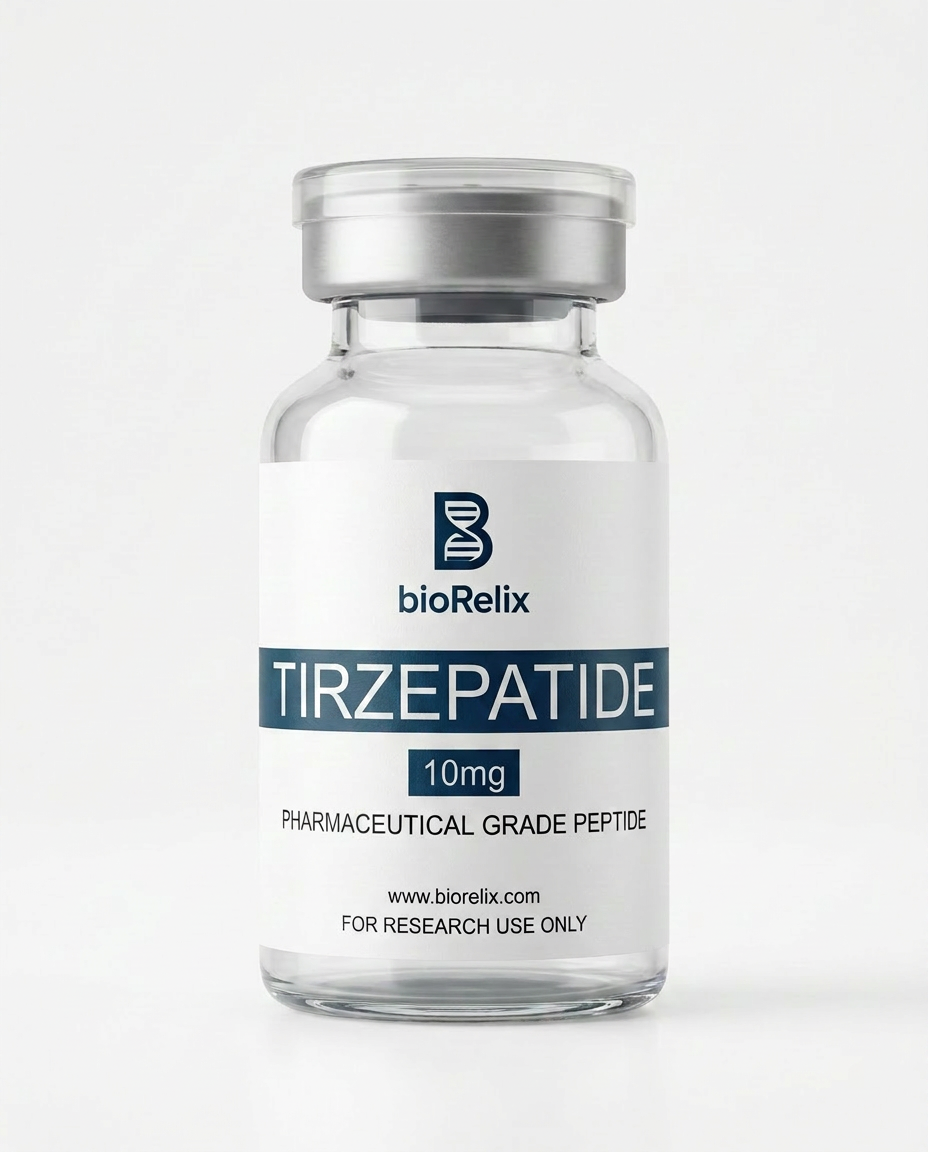
Tirzepatide (LY3298176) is a first-in-class dual glucose-dependent insulinotropic polypeptide (GIP) and glucagon-like peptide-1 (GLP-1) receptor agonist developed by Eli Lilly. Marketed as Mounjaro (type 2 diabetes) and Zepbound (obesity), it represents the first approved dual incretin therapy—achieving weight loss and glycemic control that surpassed all prior single-agonist GLP-1 medications in head-to-head trials.
Research-Grade Tirzepatide Available in Bali
Third-party HPLC tested (≥98% purity) • Same-day cold-chain delivery • Payment via USDT or COD
Buy Tirzepatide in Bali →What is Tirzepatide?
Tirzepatide is a synthetic 39-amino acid peptide engineered to simultaneously activate two incretin receptors: GIP and GLP-1. Native GIP and GLP-1 are gut hormones released after eating that stimulate insulin secretion, but both are rapidly degraded by dipeptidyl peptidase-4 (DPP-4) with half-lives of minutes. Tirzepatide overcomes this through:
- C20 fatty diacid moiety → Binds albumin, extending half-life to approximately 5 days (enabling once-weekly dosing)
- Engineered selectivity → Approximately 5-fold higher affinity for GIP receptors than GLP-1 receptors
- Biased agonism at GLP-1R → Favors cAMP signaling over β-arrestin recruitment, potentially reducing receptor desensitization
This dual-agonist mechanism was the key innovation—prior to tirzepatide, all approved incretin-based therapies targeted only GLP-1 receptors.
Mechanism of Action: Why Two Receptors?
The addition of GIP receptor agonism to GLP-1 creates synergistic metabolic effects:
GLP-1 Receptor Activation
- Appetite suppression → Central satiety signaling in hypothalamus and brainstem
- Delayed gastric emptying → Prolongs satiation, reduces postprandial glucose excursions
- Glucose-dependent insulin secretion → Enhances beta-cell response only when glucose is elevated
- Glucagon suppression → Reduces hepatic glucose output
GIP Receptor Activation
- Enhanced insulin sensitivity → GIP may improve peripheral glucose uptake in adipose and muscle tissue
- Fat metabolism modulation → GIP receptor signaling in adipocytes influences lipid storage and mobilization
- Amplified satiety → GIP potentiates GLP-1's central appetite effects
- Beta-cell preservation → Preclinical evidence suggests GIP supports beta-cell survival and proliferation
The Synergy Effect
Research by Thomas MK et al. (2021) demonstrated that tirzepatide's dual agonism improves beta-cell function and insulin sensitivity to a greater degree than GLP-1 agonism alone. The GIP component appears to enhance fat redistribution from visceral to subcutaneous depots—a metabolically favorable shift not observed with semaglutide.
Clinical Trial Data: Weight Loss (SURMOUNT Program)
The SURMOUNT trial program evaluated tirzepatide for weight management in adults with obesity or overweight:
SURMOUNT-1 (Jastreboff et al., 2022) — 72 Weeks
Published in the New England Journal of Medicine, this trial enrolled 2,539 adults with BMI ≥30 (or ≥27 with comorbidities), without diabetes:
| Dose | Mean Weight Loss | ≥5% Responders | ≥20% Responders |
|---|---|---|---|
| Placebo | -3.1% | 35% | 3% |
| 5 mg | -15.0% | 85% | 32% |
| 10 mg | -19.5% | 89% | 46% |
| 15 mg | -20.9% | 91% | 57% |
The 15 mg dose achieved a mean weight reduction of 20.9%—approximately 52 pounds (23.6 kg) for a participant with baseline weight of 231 lbs. Over half of participants at the highest dose lost more than 20% of their body weight, a threshold previously achievable only through bariatric surgery.
SURMOUNT-2 (Garvey et al., 2023) — Type 2 Diabetes + Obesity
In adults with both T2D and obesity (n=938):
- 10 mg: -12.8% weight loss, HbA1c reduction -2.1%
- 15 mg: -14.7% weight loss, HbA1c reduction -2.1%
- Placebo: -3.2% weight loss, HbA1c reduction -0.5%
Notably, tirzepatide achieved greater weight loss in the diabetic population than semaglutide achieved in the non-diabetic STEP 1 trial.
Clinical Trial Data: Diabetes (SURPASS Program)
The SURPASS trial program established tirzepatide's efficacy for type 2 diabetes, leading to FDA approval as Mounjaro:
SURPASS-2 (Frías et al., 2021) — Head-to-Head vs. Semaglutide
This landmark trial directly compared tirzepatide to semaglutide 1.0 mg in 1,879 adults with T2D:
| Treatment | HbA1c Reduction | Weight Loss | HbA1c <7% Achieved |
|---|---|---|---|
| Semaglutide 1.0 mg | -1.86% | -5.7 kg | 79% |
| Tirzepatide 5 mg | -2.01% | -7.6 kg | 82% |
| Tirzepatide 10 mg | -2.24% | -9.3 kg | 86% |
| Tirzepatide 15 mg | -2.30% | -11.2 kg | 86% |
All three tirzepatide doses achieved superior HbA1c reduction and weight loss compared to semaglutide 1.0 mg. This was the first time any diabetes medication demonstrated superiority over semaglutide in a randomized controlled trial.
SURPASS-4 (Del Prato et al., 2022) — Cardiovascular Safety
In adults with T2D and elevated cardiovascular risk (n=2,002), tirzepatide demonstrated:
- HbA1c reductions of -2.1% to -2.4% across doses
- No increased cardiovascular risk (MACE-4 composite endpoint)
- Improvements in lipid profiles: reduced LDL, triglycerides; increased HDL
Mounjaro vs. Zepbound: Same Molecule, Different Indications
| Brand | Indication | Max Dose | FDA Approval |
|---|---|---|---|
| Mounjaro | Type 2 diabetes | 15 mg weekly | May 2022 |
| Zepbound | Obesity / weight management | 15 mg weekly | November 2023 |
The peptide molecule is identical in both products. The branded distinction reflects regulatory requirements for separate indications.
Dosing Protocols (Research Context)
Clinical trials used dose escalation to minimize gastrointestinal side effects:
- Weeks 1-4: 2.5 mg subcutaneous once weekly
- Weeks 5-8: 5 mg once weekly
- Weeks 9-12: 7.5 mg once weekly (optional intermediate step)
- Weeks 13-16: 10 mg once weekly
- Weeks 17-20: 12.5 mg once weekly (optional intermediate step)
- Week 21+: 15 mg once weekly (maximum maintenance dose)
The 2.5 mg starting dose is sub-therapeutic—it exists solely for GI tolerability. Gradual titration reduced discontinuation due to nausea from ~15% to ~5% in clinical trials.
Side Effect Profile
Like all incretin-based therapies, tirzepatide's primary adverse effects are gastrointestinal:
| Side Effect | 5 mg | 10 mg | 15 mg | Placebo |
|---|---|---|---|---|
| Nausea | 24% | 28% | 31% | 9% |
| Diarrhea | 19% | 20% | 21% | 8% |
| Vomiting | 6% | 10% | 13% | 2% |
| Constipation | 6% | 6% | 6% | 2% |
GI side effects were most common during dose escalation phases and typically resolved within 2-3 weeks at each new dose. Serious adverse events were uncommon (~2-3% across all doses).
Rare but Notable Risks
- Pancreatitis — Rare; consistent with GLP-1 class labeling
- Gallbladder events — Cholelithiasis risk increases with rapid weight loss
- Injection site reactions — Mild erythema or pruritus (~3%)
- Hypoglycemia — Rare when used without sulfonylureas or insulin
Research Applications
Tirzepatide is being investigated for applications beyond diabetes and obesity:
- NASH/MASH (metabolic-associated steatohepatitis) — SYNERGY-NASH trial showed significant liver fat reduction and fibrosis improvement
- Heart failure with preserved ejection fraction (HFpEF) — SUMMIT trial demonstrated improved heart failure symptoms and exercise capacity
- Obstructive sleep apnea — SURMOUNT-OSA trial showed 50-60% reduction in apnea-hypopnea index
- Polycystic kidney disease — Early-phase investigations
- Cardiovascular outcomes — SURPASS-CVOT ongoing
Tirzepatide vs. Semaglutide: Key Differences
| Property | Tirzepatide (Mounjaro/Zepbound) | Semaglutide (Ozempic/Wegovy) |
|---|---|---|
| Mechanism | GLP-1 + GIP dual agonist | GLP-1 agonist only |
| Developer | Eli Lilly | Novo Nordisk |
| Max weight loss (clinical) | ~22% (72 weeks) | ~15% (68 weeks) |
| HbA1c reduction (head-to-head) | -2.30% | -1.86% |
| Dosing frequency | Once weekly | Once weekly |
| CV outcomes data | Ongoing (SURPASS-CVOT) | Positive (SELECT trial) |
Availability in Indonesia
Mounjaro and Zepbound are not widely available in Indonesia and are not registered with BPOM (Indonesia's drug regulatory authority). Research-grade tirzepatide—not manufactured by Eli Lilly—is legal to purchase in Indonesia for non-human, in vitro research purposes.
BioRelix supplies research-grade tirzepatide synthesized by third-party laboratories with HPLC purity verification (≥98%). Our product is:
- Not manufactured by Eli Lilly
- Not a pharmaceutical-grade drug
- Not approved for clinical use in humans
- Intended solely for in vitro research
Tirzepatide and Body Composition
Beyond scale weight, tirzepatide has demonstrated significant effects on body composition. In the SURMOUNT-1 trial, dual-energy X-ray absorptiometry (DXA) sub-study data showed that approximately 70-80% of weight lost with tirzepatide was fat mass, with lean mass relatively preserved compared to caloric restriction alone.
This composition effect is particularly relevant for metabolic research:
- Visceral fat reduction — MRI sub-studies showed preferential reduction in visceral adipose tissue (VAT), the metabolically dangerous fat surrounding organs
- Hepatic fat clearance — Liver fat content decreased by 37-50% across doses, exceeding reductions seen with semaglutide in comparable populations
- Improved waist circumference — Mean reductions of 14-18 cm at 72 weeks, reflecting visceral fat loss
- Lean mass preservation — The GIP component may contribute to skeletal muscle glucose uptake and protein synthesis signaling
Yabe et al. (2023) investigated tirzepatide's effects on lipid metabolism in Japanese adults with T2D and found significant reductions in triglycerides (-20-25%), LDL cholesterol, and small dense LDL particles, alongside increases in HDL cholesterol—a lipid profile shift associated with reduced cardiovascular risk.
Clinical Pipeline: Beyond Current Approvals
Eli Lilly's clinical development program for tirzepatide extends well beyond diabetes and obesity:
SYNERGY-NASH (Metabolic Liver Disease)
In a Phase 2 trial, tirzepatide achieved NASH resolution without worsening fibrosis in 44-62% of participants (vs. 10% placebo). At the highest dose, 51% showed at least one stage of fibrosis improvement. These results position tirzepatide as a potential treatment for a condition with no currently approved pharmacotherapy.
SUMMIT (Heart Failure with Preserved Ejection Fraction)
The SUMMIT trial demonstrated that tirzepatide improved the Kansas City Cardiomyopathy Questionnaire score (a measure of heart failure symptoms and quality of life) and reduced body weight in HFpEF patients with obesity. This is significant because obesity-related HFpEF has been particularly resistant to existing heart failure treatments.
SURMOUNT-OSA (Obstructive Sleep Apnea)
Tirzepatide reduced the apnea-hypopnea index (AHI) by approximately 50-60% in obese adults with moderate-to-severe OSA—comparable to CPAP therapy effectiveness and far exceeding any prior pharmacological intervention for sleep apnea.
Storage and Reconstitution
Tirzepatide is supplied as lyophilized powder and requires reconstitution with bacteriostatic water:
- Unreconstituted: Store at 2-8°C (refrigerator) or -20°C (freezer for long-term storage)
- Reconstituted: Store at 2-8°C, use within 28 days
- Avoid: Freezing after reconstitution, exposure to light, temperature fluctuations
For detailed reconstitution instructions, see our Peptide Reconstitution Guide.
Order Research-Grade Tirzepatide in Bali
15 mg vial (single dose) — IDR 1,400,000
- ✓ Third-party HPLC tested (≥98% purity)
- ✓ Same-day delivery (orders before 2 PM WITA)
- ✓ Cold-chain storage from lab to door
- ✓ Payment via USDT (TON/TRC-20) or cash on delivery
References
- Jastreboff AM, Aronne LJ, Ahmad NN, et al. Tirzepatide Once Weekly for the Treatment of Obesity. N Engl J Med. 2022;387(3):205-216. doi:10.1056/NEJMoa2206038
- Frías JP, Davies MJ, Rosenstock J, et al. Tirzepatide versus Semaglutide Once Weekly in Patients with Type 2 Diabetes. N Engl J Med. 2021;385(6):503-515. doi:10.1056/NEJMoa2107519
- Garvey WT, Frias JP, Jastreboff AM, et al. Tirzepatide once weekly for the treatment of obesity in people with type 2 diabetes (SURMOUNT-2): a double-blind, randomised, multicentre, placebo-controlled, phase 3 trial. Lancet. 2023;402(10402):613-626.
- Thomas MK, Nikooienejad A, Bray R, et al. Dual GIP and GLP-1 Receptor Agonist Tirzepatide Improves Beta-cell Function and Insulin Sensitivity in Type 2 Diabetes. J Clin Endocrinol Metab. 2021;106(2):388-396.
- Del Prato S, Kahn SE, Pavo I, et al. Tirzepatide versus insulin glargine in type 2 diabetes and increased cardiovascular risk (SURPASS-4): a randomised, open-label, parallel-group, multicentre, phase 3 trial. Lancet. 2021;398(10313):1811-1824.
- Rosenstock J, Wysham C, Frías JP, et al. Efficacy and safety of a novel dual GIP and GLP-1 receptor agonist tirzepatide in patients with type 2 diabetes (SURPASS-1): a double-blind, randomised, phase 3 trial. Lancet. 2021;398(10295):143-155.
⚠️ Reminder: This product is for research use only. Not for human consumption or clinical use. Always consult a licensed physician for medical advice regarding obesity, diabetes, or metabolic conditions.