
Best Padel Clubs in Bali (2026) — Ranked & Reviewed
Bali has become one of the world's most improbable padel destinations. In a matter of three years, the island has gone from having a handful of courts to a scene that includes world-class academies, international tournaments, NOX-certified coaching programmes, and purpose-built clubs that rival anything in Europe or the Middle East. If you want to play padel in a setting with rice field views, an infinity pool, and a cold plunge waiting when you're done, Bali is — genuinely — one of the best places on the planet to do it.
This guide ranks every significant padel club in Bali based on data from PadelVia, Honeycombers, Bali Buddies, Johnny Africa, The Bali Bible, onBali, and Google reviews. We've also included the recovery section that most padel content ignores — because if you're playing three or four times a week in the heat, what happens after your session matters as much as what happens during it.
Bali Padel Academy (BPA)
Bali Padel Academy is the clear consensus #1 padel destination in Bali across every ranking and review platform we checked. Nestled deep in the rice fields of Canggu — past the noise of Batu Bolong, past the cafes and scooter traffic — BPA feels like arriving at a private sports complex that has been designed to make you forget you are in Southeast Asia. Seven covered panoramic courts are arranged around a central court with 200 spectator seats, giving the club a genuinely competitive atmosphere without sacrificing accessibility for casual players.
The facilities surround the courts rather than being an afterthought: an infinity pool overlooking the rice paddies, sauna, ice bath, jacuzzi, kids playground, pro shop, and the onsite restaurant Bendeja, which serves food serious enough that members return for lunch even when they're not playing. BPA is the only NOX-certified academy in Southeast Asia, meaning its coaching programme — led by international head coaches Aleix Puchol and Jesus Olmo — follows a structured, internationally standardised methodology that is rare outside of Europe.
Reviews consistently highlight the atmosphere: competitive without being intimidating, international without feeling exclusive. The club runs regular tournaments that attract players from across Bali and visiting athletes from abroad. If you play padel and you're in Bali, coming here once is mandatory.
Bali Social Club
Bali Social Club earns its #2 ranking through a combination of court quality, social infrastructure, and the most comprehensive wellness setup attached to any padel club in Bali. Seven courts in a contemporary design — BPA's sole BullPadel partner on the island, meaning the equipment standards are certified — sit alongside a pool, bar, sauna, steam room, and two cold plunges. The dual cold plunge setup (one cold, one genuinely freezing ice bath) is particularly relevant for serious players who understand that what happens after the match determines whether you can play again tomorrow.
What distinguishes Bali Social Club from BPA is its social DNA. The Americano tournaments — round-robin formats where partners rotate — are a regular fixture and a genuinely easy way to integrate into Bali's padel community as a visitor. The bar and sunbed area stays populated well after the last match, and the vibe is more club-night than sports club. For players who want padel as part of a broader social experience rather than a pure athletic pursuit, Bali Social Club is the better fit.
Canggu Padel Centre
Located in the heart of Berawa, Canggu Padel Centre offers four semi-indoor all-weather super-panoramic courts in one of Canggu's most convenient locations — close to the main beach road, easily accessible from most accommodation. The courts are well-maintained and the all-weather construction means play is far more reliable during the wet season than open-air alternatives.
The club has built a strong regular community of expat and local players who book the same sessions each week. For visitors, drop-in court hire is available and booking is straightforward via Playtomic. The coaching programme is active and well-regarded, with options for beginners through to competitive players. The facilities are solid — good changing rooms, a café area — without the premium resort feel of BPA or Bali Social Club. That is not a criticism: Canggu Padel Centre is priced accordingly and delivers excellent value for regular play.
Island Sports Club
Island Sports Club is the only padel operator in Bali with a genuinely compelling dual-location offering. The Cemagi/Canggu location — set amid calm rice paddies — has three courts (two covered, one open-air outdoor) with a relaxed, nature-immersed feel. The Uluwatu location is a different proposition entirely: four panoramic courts with clifftop views over Bali's southern coastline, a locker room, outdoor café, and a pro shop. No other padel experience in Bali puts you closer to the ocean horizon.
The club has developed a reputation for quality coaching and a welcoming community at both locations. The Uluwatu courts in particular attract players who plan a half-day around their session — surfing or a beach club before, padel in the afternoon, dinner in Pecatu. ISC's multi-sport profile (fitness and golf alongside padel) means it also draws a membership base that trains seriously, which keeps the competitive level of pickup games higher than at more casual venues.
Jungle Padel
Jungle Padel holds an important historical distinction: it was Indonesia's first padel club chain, and the community it built in Bali's early padel days has given it a loyal following that persists even as newer, more premium venues have opened. The courts — set against scenic tropical backdrops — have an energetic, youthful atmosphere. The dedicated mobile app for booking and matchmaking is a genuine differentiator: it is the easiest padel booking experience in Bali, and the matchmaking function connects visiting players with local opponents at compatible levels.
Jungle Padel's coaching sessions, café, and pro shop round out the offer. The facilities are not as premium as BPA or Bali Social Club, but the pricing reflects that, and the vibe is arguably more fun for casual players who want a match and a beer rather than a structured training session. The multiple locations across Bali make it the most geographically accessible chain for visitors staying outside Canggu.
Amare Padel Club
Amare is Bali's most boutique padel experience — five semi-indoor courts in the quiet village of Umalas, just outside Canggu, with a refined atmosphere that prioritises smaller crowds and better individual attention. The court surfaces are consistently praised for their maintenance standards, and the coaching team has developed a reputation for genuine technical quality.
The recovery infrastructure at Amare is exceptional for a club of its size: a sauna and ice bath are included with membership, available free of charge to members after play. This is the kind of detail that separates clubs that understand athletic performance from those that treat wellness as an afterthought. The fully indoor courts also make Amare one of Bali's most reliable year-round padel destinations — no wet season surface issues, no heat problems from direct sun exposure.
One recurring complaint in reviews is the ventilation during daytime play in the hottest months — the indoor environment traps heat, and early morning or evening sessions are noticeably more comfortable. Plan accordingly.
Bam Bam Padel
Bam Bam Padel is Ubud's padel answer — and the setting alone earns it a place on this list. Five panoramic courts surrounded by tropical jungle, rice terraces, and the lush greenery that makes Ubud feel entirely different from Canggu's beach-town energy. If you're staying in Ubud and want to play padel without a 90-minute round trip to Canggu, Bam Bam is the obvious choice and delivers an experience that genuinely reflects the environment.
The courts are well-maintained and the club runs coaching and social sessions. The café on site is solid. The overall feel is more relaxed and less competitive than the Canggu clubs — the Ubud crowd tends toward wellness over sport — which makes it a friendly environment for beginners and for serious players who want to dial down the competitive intensity for a session.
Bam Bam also earns mentions in multiple expat guides as a destination worth visiting specifically for the atmosphere and aesthetics — it photographs better than almost any other padel facility in Bali, which counts for something in a community where the social element matters.
Why Recovery Is Non-Negotiable for Padel Players
Padel looks deceptively manageable. The court is small, the rallies are short, and a 90-minute match rarely leaves you feeling as destroyed as a long run or a heavy lifting session. This perception is the leading cause of overuse injuries in the sport — players underestimate the cumulative load they are placing on a small set of joints and soft tissues, and by the time something hurts enough to mention, the damage has been accumulating for weeks.
The four injury patterns that account for the majority of padel-related problems are:
Padel Elbow
Lateral epicondylitis from repetitive wrist extension on groundstrokes and volleys. The most common padel overuse injury.
Rotator Cuff
Shoulder impingement and rotator cuff strains from overhead smash mechanics and defensive lobs.
Knee (Patellar Tendon)
Patellar tendinopathy from the explosive lateral movements and rapid direction changes that define padel court movement.
Ankle Sprains
High frequency of lateral ankle sprains due to the unpredictable direction changes in a fast padel rally.
Playing in Bali's climate adds an additional layer. Heat and humidity reduce the efficiency of the body's cooling systems during play, driving heart rate higher at equivalent effort levels. Post-match, the physiological repair processes that should kick in immediately — inflammation resolution, protein synthesis, collagen remodelling — are competing with thermoregulatory demands for the body's limited resources. Recovery in Bali takes longer than it does at home, not shorter.
The ice baths and saunas at BPA, Bali Social Club, and Amare Padel are the right instinct — contrast therapy accelerates the resolution of post-exercise inflammation and reduces next-day muscle soreness. But they address the acute phase of recovery. The chronic adaptation processes — tendon remodelling, collagen turnover, satellite cell-mediated muscle repair — operate over days to weeks and require different inputs.
Research Compounds Used by Bali's Padel Community
Among Bali's more serious padel players — those playing four or more sessions per week, often alongside gym training — a small but growing number are incorporating research peptides into their recovery protocols. Here is what the published pre-clinical literature shows for the most common compounds.
BPC-157
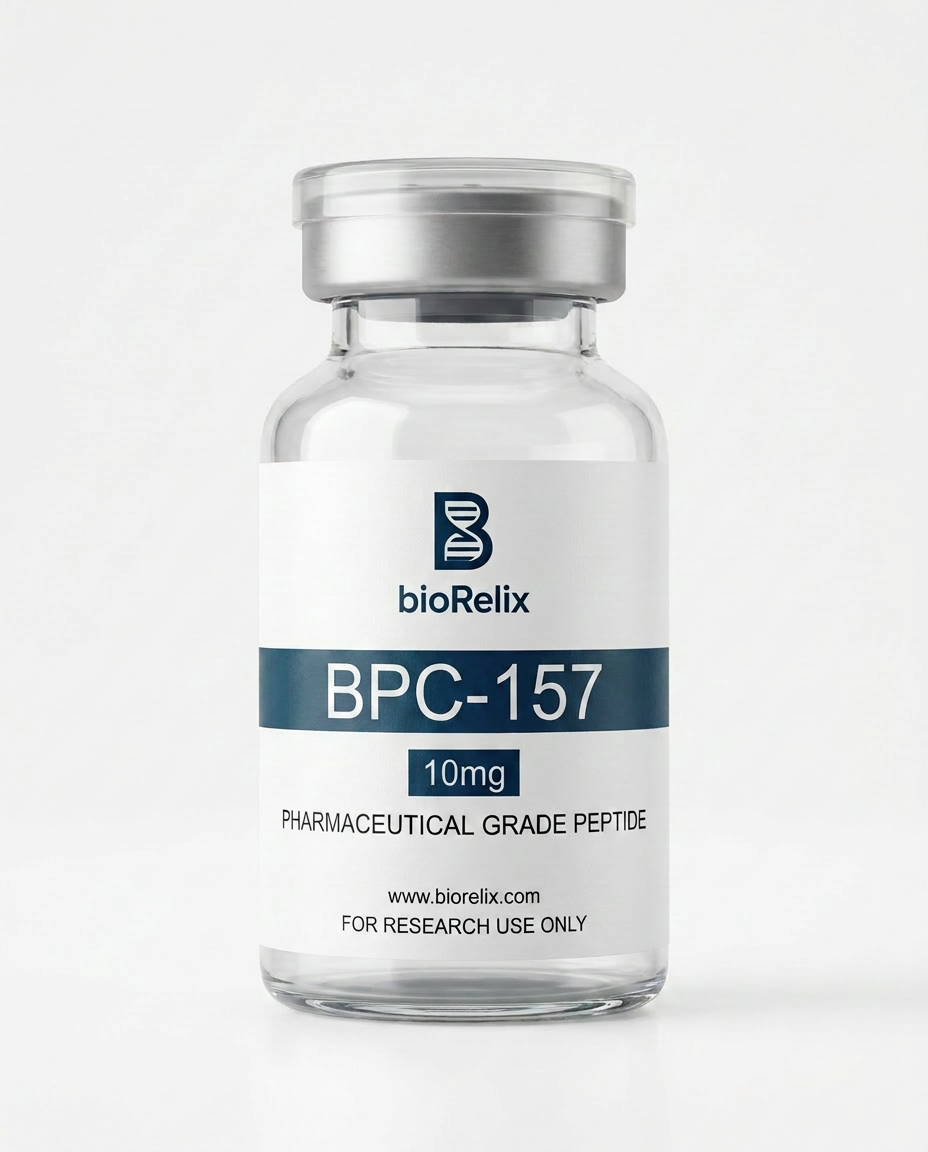
The most directly relevant compound for padel's injury profile. Over 100 peer-reviewed publications in pre-clinical models document accelerated healing responses in tendon and ligament tissue — exactly the structures that take the load of padel's repetitive wrist, shoulder, and knee mechanics. Studies by Pevec et al. (2010) and Gwyer et al. (2019) documented improved biomechanical parameters in tendon damage models. Proposed mechanisms include VEGF-driven angiogenesis (new blood vessel formation at repair sites) and growth factor upregulation.
Full BPC-157 research guide →TB-500
Synthetic Thymosin Beta-4 fragment, studied for its role in activating muscle satellite cells — the stem cells that drive muscle repair after training-induced damage. Philp et al. (2011) demonstrated TB-500's ability to promote satellite cell entry into the cell cycle, which is the initiating step in post-exercise muscle remodelling. Particularly relevant after high-volume play where accumulated muscle microtrauma needs efficient resolution before the next session.
Full TB-500 research guide →GHK-Cu
Copper-binding tripeptide found naturally in human plasma. Particularly relevant for padel players due to its studied role in collagen synthesis and tendon remodelling — the structural repair process that determines whether a recovering tendon returns to its pre-injury mechanical properties. Research (Pickart et al., 2015) proposed modulation of 4,000+ genes in collagen synthesis and anti-inflammatory pathways. Often used later in a protocol — 4–6 weeks after an acute injury — when the remodelling phase has begun.
View all recovery compounds →NAD+
While not a tissue-repair compound specifically, NAD+ addresses the energy substrate that underlies all repair processes. Post-match, the body's mitochondria must generate ATP to power protein synthesis, inflammation resolution, and DNA repair. In Bali's heat, thermoregulation competes with working muscle for available NAD+. Over 300 registered clinical trials are investigating NAD+ precursor supplementation. Commonly layered alongside BPC-157 and TB-500 to ensure cellular energy is not rate-limiting for repair.
Full NAD+ research guide →The most common protocol in Bali's padel community combines BPC-157 and TB-500 — either separately or as a pre-blended vial — for structural tissue repair, with NAD+ for cellular energy support. GHK-Cu is typically added for players managing a specific tendon or ligament issue. BioRelix offers all four compounds with same-day cold-chain delivery across Bali. For a deeper read on the research, see the padel injury and peptides guide.
Recovery Compounds Delivered to Your Canggu Club
HPLC tested ≥98% purity · Same-day cold-chain delivery · Order via WhatsApp
View Products →