
Canggu's Gym Boom & Why Recovery Is the Missing Piece (2026)
Canggu has quietly become one of Southeast Asia's most concentrated fitness communities. What began as a surf and yoga enclave has transformed into a neighbourhood where international-standard strength gyms, CrossFit boxes, functional fitness studios, and boutique training spaces compete for space between coffee shops and padel courts. The density of high-level training options within a few square kilometres of Echo Beach is remarkable by any measure.
The consequence is that many people living in or visiting Canggu are training harder — and more frequently — than they ever do at home. A two-week stay might see someone hit six or seven sessions of high-intensity work in a climate that places additional physiological demands on the body. Without deliberate recovery infrastructure to match that training load, the mathematics of adaptation turn unfavourable: the injury rate climbs, progress stalls, and what was supposed to be a productive stint in Bali becomes a setback.
This piece covers the gym landscape in Canggu as it stands in 2026, the science of why recovery matters, and what the published research literature shows about compounds increasingly used by the Bali fitness community to support tissue repair, cellular energy, and training adaptation.
Canggu's Fitness Scene in 2026
Ten years ago, fitness in Canggu meant a yoga shala or a basic hotel gym. The trajectory since then has been steep. The surge of digital nomads and long-stay expats post-2020 brought a demographic that prioritised training, and operators followed the demand. The opening of several padel clubs (covered in our padel injury recovery guide) has added another dimension to Canggu's movement culture, but the strength and conditioning scene is what has most transformed the neighbourhood's physical character.
Canggu now competes credibly with Chiang Mai, Lisbon, and Medellín as a global hub for the fitness-forward remote worker. Instagram-worthy gym environments help, but what keeps people coming back are genuine coaching standards, well-maintained equipment, and communities that push performance rather than just aesthetics.
Gyms in Canggu: Established & New
The following gyms represent the current landscape — a mix of long-running institutions that helped define Canggu's fitness identity and newer openings that reflect the continued growth of the market.
Established Gyms
Tribal Gym Bali
One of Canggu's original serious lifting gyms. Heavy compound equipment, knowledgeable staff, and a no-nonsense atmosphere that has built a loyal community over many years. Multiple locations across Bali.
Outlaw Gym Bali
Underground feel with serious equipment. Known for powerlifting culture and an international membership base. Long-standing reputation as one of the most authentic lifting environments in Canggu.
Bali Fitness – Canggu
Part of the well-run Bali Fitness chain. Extensive free weights and machines, air conditioning, reliable hours. Popular with expats and tourists who want a familiar, full-service gym experience.
CrossFit Canggu
Affiliated box with coached WODs, Olympic lifting, and gymnastics. Strong community culture with regular open gym hours. Drop-in friendly for travelling athletes.
Functional Fitness Bali
Group functional training with a focus on movement quality. Small class sizes, experienced coaches. Popular for conditioning work alongside a heavier gym programme.
Finns Recreation Club
Canggu's most comprehensive wellness facility. Full gym floor, pools, group classes, spa, and recovery services under one roof. Day and monthly memberships available. Higher price point, but unmatched amenity range.
The Canggu Club
Established sports and social club with a full fitness centre, tennis courts, and pools. Long a pillar of Canggu's expat community, with membership options for long-stay residents.
Temple Fitness
Open-air gym with a strong Instagram presence that backs up its aesthetics with solid equipment and coaching. Popular for morning sessions before the heat builds.
Newer Openings (2024–2026)
Brawn Fitness Canggu
One of the most talked-about recent openings. High-ceiling space with top-tier powerlifting and bodybuilding equipment. Quickly built a following among serious lifters who want quality iron without the premium club price tag.
Iron Bali
New-build gym with a focus on strength training. Racks, platforms, and heavy dumbbells in a well-ventilated industrial space. Growing reputation for equipment quality and value.
The Sweat Lab
Boutique performance training studio. Programming built around athletic performance rather than aesthetics — speed, power, conditioning. Small group and one-on-one coaching available.
Movement Canggu
Calisthenics, gymnastics, and mobility-focused training space. Unique in the Canggu landscape. A favourite for athletes who want to complement gym work with movement quality training.
Alpha Gym Bali
Budget-friendly open-air gym with a surprisingly complete equipment offering. No frills, but reliable. Popular with longer-stay visitors who want daily access without a premium monthly fee.
The Athletic Club Bali
Performance-oriented gym opened late 2025. Focus on sports science-informed programming, heart rate monitoring, and data-driven training. Appeals to competitive athletes and biohackers.
Overflow Fitness
Group HIIT and strength classes in a high-energy studio environment. New concept with multiple class formats throughout the day, popular with visitors looking for coached training without long-term commitment.
Base Camp Canggu
Outdoor functional training facility. Rigs, turf, sleds, and battle ropes in a semi-open-air setting. Positioned as a CrossFit alternative with flexible drop-in pricing and a welcoming community culture.
Why Recovery Is the Rate-Limiting Factor
Among serious athletes and sports scientists, recovery is understood to be not merely the absence of training but an active physiological process that determines whether a given training stimulus produces adaptation or breakdown. This distinction — between productive stress and accumulated damage — is the difference between getting fitter and getting injured.
The mechanisms are well-characterised. Resistance training causes controlled microtrauma to muscle fibres. The inflammatory response that follows recruits satellite cells, growth factors, and collagen-producing fibroblasts to repair and reinforce the damaged tissue. When the repair process runs to completion before the next training stimulus arrives, the tissue returns stronger. When it doesn't — because the next session begins before repair is complete — the structural damage accumulates, fatigue deepens, and the probability of acute injury spikes.
Research on training frequency and recovery has consistently shown that the optimal training load is not the maximum tolerable load but the maximum productive load — the highest volume from which full recovery is possible within the available time window. For most people training twice per day in a tropical environment away from home, that window is shorter than they appreciate.
Training in the Tropics: Extra Demands on the Body
Bali's climate — typically 28–34°C with 70–90% humidity — places measurable additional demands on physiology during exercise. The body's primary cooling mechanism in heat is sweat-driven evaporative cooling, but high ambient humidity reduces evaporative efficiency, meaning core temperature rises faster at equivalent workloads compared to cooler environments.
The cardiovascular consequence is significant: heart rate during a given effort is 10–20 bpm higher in hot, humid conditions than in temperate environments, and cardiac output is partially redirected to skin circulation for cooling rather than working muscle. Studies published in the Journal of Applied Physiology have documented that moderate-intensity exercise in conditions comparable to Bali can reduce time to exhaustion by 20–30% compared to thermoneutral conditions.
Additional factors compounding the recovery deficit for Canggu visitors include:
- Time zone adjustment — sleep architecture is disrupted for 3–7 days following travel across multiple time zones, suppressing growth hormone release and impairing overnight tissue repair
- Alcohol consumption — ubiquitous in Canggu's social scene; even moderate consumption suppresses protein synthesis and disrupts sleep stages critical for recovery
- Overestimated baseline fitness — visitors often train at the frequency and intensity they maintained at home, without accounting for heat tax, jet lag, and accumulated social activity
- Dehydration — chronic mild dehydration is common in the tropics and measurably impairs both performance and tissue repair processes
Research Compounds for Recovery
Against this background of elevated training load and compressed recovery windows, the research peptide community in Canggu has grown substantially. The compounds most commonly discussed in the context of recovery research fall into several categories: tissue repair peptides, cellular energy modulators, and anti-inflammatory compounds. Here is what the published literature shows.
BPC-157 (Body Protection Compound-157)
BPC-157 is a synthetic pentadecapeptide derived from a protein found in human gastric juice. It has been the subject of over 100 peer-reviewed publications, making it one of the most extensively studied research peptides in the tissue repair category. In pre-clinical models, BPC-157 has been studied for its effects on tendon, ligament, muscle, and gastrointestinal tissue — the precise tissue types most stressed by high-volume gym training and Bali's active lifestyle.
Key studied mechanisms include upregulation of VEGF expression (promoting angiogenesis at repair sites), modulation of the nitric oxide system (which governs local blood flow and inflammation), and stimulation of growth factor signalling pathways including EGF and FGF. A 2014 study in the Journal of Physiology and Pharmacology (Sikirić et al.) documented accelerated formation of granulation tissue and increased vascularity in cutaneous wound models.
For the gym context specifically, studies in tendon damage models (Pevec et al., 2010; Krivic et al., 2006) showed improved biomechanical parameters and organisation of collagen fibres in damaged tendons treated with BPC-157. These findings are directly relevant to the overuse tendinopathies — Achilles, patellar, rotator cuff — that accumulate with high training frequency.
TB-500 (Thymosin Beta-4 Fragment)
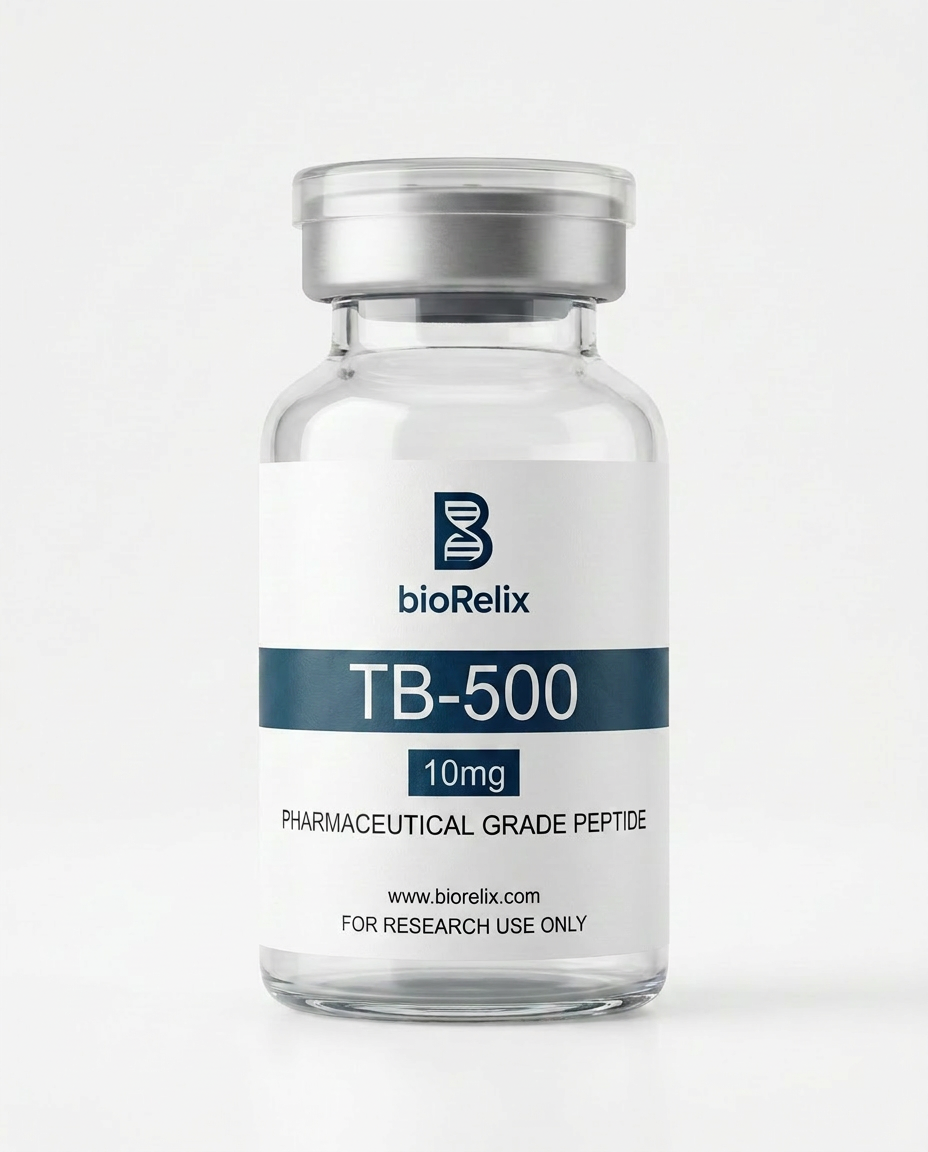
TB-500 is a synthetic analogue of Thymosin Beta-4 (Tβ4) fragment 17–23, a protein present in virtually all human and animal cells. Its primary studied function is the sequestration of G-actin, the monomeric building block of the actin cytoskeleton — a role fundamental to cell migration, differentiation, and tissue remodelling after injury. For athletes, the research interest lies particularly in TB-500's documented effects on muscle satellite cells, the stem cells responsible for muscle repair and growth.
Research by Philp et al. (2011, Journal of Physiology) demonstrated that Tβ4 promotes muscle satellite cell activation and proliferation, the foundational step in repairing exercise-induced muscle damage. Additional pre-clinical work has documented TB-500's pro-angiogenic effects (new capillary formation at repair sites) and anti-inflammatory properties, including downregulation of inflammatory cytokines that impair recovery when chronically elevated.
TB-500 is frequently studied in combination with BPC-157 based on the hypothesis that the two compounds act through complementary rather than redundant mechanisms — BPC-157 acting primarily through growth factor and NO pathways, TB-500 through the actin/cytoskeletal axis. The TB-500 research guide covers the literature in more detail.
NAD+ (Nicotinamide Adenine Dinucleotide)
NAD+ occupies a unique position among research compounds because it operates at the most fundamental level of cellular energy production. As the primary electron carrier in the mitochondrial electron transport chain, NAD+ is directly consumed in the generation of ATP — the cell's energy currency. During intense exercise, NAD+ is cycled at high rates, and its availability becomes a limiting factor in sustained energy output.
Beyond energy metabolism, NAD+ is the obligate substrate for sirtuin deacetylases (SIRT1–7) and PARP enzymes involved in DNA strand-break repair. Post-exercise DNA damage — a normal consequence of reactive oxygen species generated during high-intensity training — requires NAD+ for repair. The Nature Communications-published work by Rajman et al. (2018) provided a detailed mechanistic review of NAD+'s role in ageing and metabolic function, noting that NAD+ levels decline with both age and metabolic stress.
For athletes training in Bali's heat, the mitochondrial demand is amplified by thermoregulation — a significant additional ATP consumer that competes with working muscle for available NAD+. Over 300 registered clinical trials are currently investigating NAD+ precursor supplementation across contexts including exercise capacity, metabolic function, and cellular ageing.
GHK-Cu (Copper Peptide)
GHK-Cu is a naturally occurring copper-binding tripeptide (Glycyl-L-Histidyl-L-Lysine complexed with copper) found in human plasma, urine, and saliva. Its endogenous levels decline significantly with age — from approximately 200 ng/mL in young adults to under 80 ng/mL by age 60 — a decline associated with reduced wound healing capacity and slower tissue remodelling.
Research has documented GHK-Cu's role in stimulating collagen and glycosaminoglycan synthesis in fibroblasts, promoting angiogenesis, and activating antioxidant enzyme systems. Crucially for the training context, collagen is the structural protein of tendons, ligaments, and the extracellular matrix of muscle — the tissues that bear the mechanical load of resistance training and take longest to remodel after stress.
A 2015 review in BioMed Research International (Pickart et al.) documented GHK-Cu's broad regenerative activity across tissue types and proposed a mechanism involving modulation of over 4,000 human genes in pathways related to collagen synthesis, anti-inflammation, and tissue remodelling. This breadth of genomic effect has made GHK-Cu a subject of increasing research interest in the context of recovery and anti-ageing protocols.
View recovery compounds →How Compounds Are Combined in Research Protocols
In the Bali research community, the compounds above are rarely used in isolation. The most commonly researched combinations reflect the complementary mechanisms of the individual peptides:
BPC-157 + TB-500 is the most established pairing. The rationale is mechanistic: BPC-157 operates primarily through growth factor upregulation and NO modulation, while TB-500 acts through the actin/cytoskeletal axis and satellite cell activation. Pre-clinical work has suggested that the combination produces more pronounced tissue repair responses than either compound alone, though direct comparative human data does not yet exist. BioRelix offers a pre-blended BPC-157 + TB-500 vial for researchers wanting to work with both simultaneously.
NAD+ with tissue repair peptides is a second common protocol pairing. The logic is hierarchical: tissue repair requires cellular energy (ATP), and ATP production requires NAD+. In a training context where both are under demand, supplementing NAD+ is intended to ensure the cellular energy substrate is not rate-limiting for the repair processes supported by BPC-157 and TB-500.
GHK-Cu as a collagen synthesis adjunct is particularly popular among athletes with tendon-heavy training histories — powerlifters, overhead athletes, padel players — given the specific role of collagen remodelling in restoring tendon mechanical properties. It is often layered into a protocol 4–6 weeks after an acute injury event, when the inflammatory phase has resolved and the remodelling phase has begun.
For a detailed breakdown of the metabolic recovery compounds — including Retatrutide, Tirzepatide, and Semaglutide — which are used by a significant portion of Canggu's training population for body composition management, see the metabolic compound comparison guide.
Research-Grade Recovery Peptides in Canggu
HPLC tested ≥98% purity · Same-day cold-chain delivery across Bali · WhatsApp ordering
View Products →